
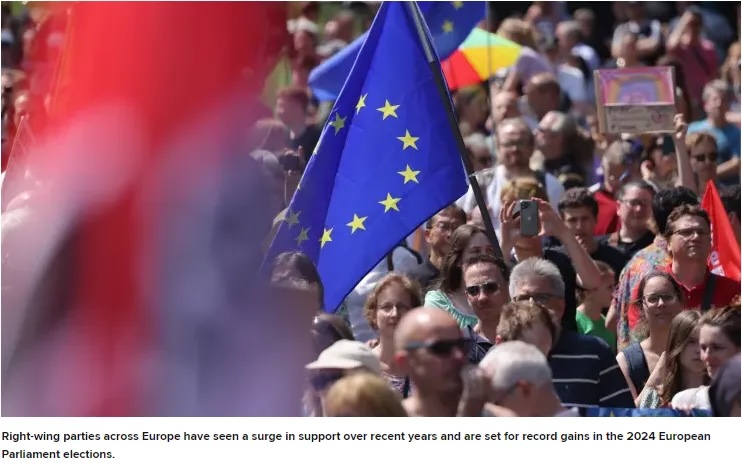
1. What are Far-Right and Far-Left Parties?
Far-right and far-left parties represent the extreme ends of the political spectrum. Far-right parties typically advocate for nationalist, anti-immigration, and often authoritarian policies. They emphasize traditional values, strong national defense, and are often skeptical of globalization and supranational organizations like the European Union (EU). In contrast, far-left parties focus on socialist or communist ideologies, advocating for wealth redistribution, social equality, and extensive government intervention in the economy. They often support progressive social policies and are critical of capitalist structures.
2. Differences in Governance Policies
The governance policies of far-right and far-left parties differ significantly:
-
Far-Right Parties: These parties emphasize national sovereignty, stricter immigration controls, and often propose reducing the influence of supranational bodies like the EU. They advocate for free-market policies but with a strong emphasis on protecting domestic industries and jobs. Socially, they tend to promote conservative values and may oppose progressive social reforms.
-
Far-Left Parties: Far-left parties focus on reducing economic inequality through progressive taxation, nationalization of key industries, and extensive social welfare programs. They support open immigration policies and advocate for human rights and environmental sustainability. Their approach to governance involves significant government intervention in the economy to ensure social justice and equality.
3. Impact of Far-Right Success in Germany and France
The recent electoral successes of far-right parties in Germany and France could bring notable changes to European politics and policies. In France, the National Rally (RN) secured 31.7% of the vote, surpassing President Emmanuel Macron's Renaissance party, which garnered 14.9%. According to The New York Times, "this result positions Marine Le Pen, the RN leader, as a significant contender in future presidential elections." Similarly, in Germany, the Alternative for Germany (AfD) outperformed Chancellor Olaf Scholz's Social Democratic Party (SPD), marking a historic low for the SPD.
This shift towards far-right parties suggests potential changes in Europe, including:
- Stricter Immigration Policies: Far-right parties' success may lead to more stringent immigration controls and policies aimed at preserving national identity.
- Economic Protectionism: There could be a move towards protecting domestic industries from global competition, potentially affecting trade relations within the EU and beyond.
- EU Skepticism: Increased representation of far-right parties in the European Parliament may lead to more resistance against EU policies and initiatives, complicating legislative processes.
As reported by the Associated Press, "the shift to the right in the EU will make passing legislation more difficult."
4. Macron's Decision to Dissolve the National Assembly
In response to the electoral gains of far-right parties, French President Emmanuel Macron announced the dissolution of the National Assembly and scheduled new elections. This move aims to reassert control and counter the rising influence of the National Rally. Macron's decision reflects the urgency to stabilize his political position and maintain support for his pro-European Union policies. As reported by The New York Times, Macron stated in a televised speech, “the European Parliament election result is not a good outcome for parties defending Europe.”
5. Broader Implications for the EU, the US, and the World
The rightward shift in European politics has broader implications:
- European Union: The rise of far-right parties could lead to more fragmented and contentious EU policymaking. Legislative processes might become more challenging, impacting key areas like immigration, energy, and climate change. According to the Associated Press, "the shift to the right in the EU will make passing legislation more difficult."
- United States: As a key ally, the US may need to navigate a more complex relationship with Europe, balancing its interests with the differing policies of far-right governments.
- Global Impact: The shift could influence global trade dynamics, with potential protectionist measures affecting international markets. Additionally, Europe's stance on global issues like climate change and human rights might evolve, impacting global initiatives and agreements.
Additional Context from Recent Reports
The Associated Press reported on the 9th that the European Union's 27 member states have significantly shifted to the right. The New York Times also noted on the 9th that far-right parties have made substantial gains in Germany and France.
In France, the election will select 81 Members of the European Parliament representing the country. According to the latest exit polls released by multiple French media outlets on the evening of the 9th, the far-right National Rally secured 31.7% of the votes, making it the leading party in France. The ruling Renaissance party received 14.9% of the votes, coming in second. The New York Times stated that "this result could place Marine Le Pen, Macron's main rival, in the most favorable position to challenge him directly in the presidential election in three years."
On the same evening, Macron stated in a televised speech that the European Parliament election result is "not a good outcome for parties defending Europe." He announced the dissolution of the National Assembly and scheduled two rounds of National Assembly elections on June 30 and July 7.
Germany faces a similar situation. The far-right Alternative for Germany (AfD) won more seats than Chancellor Olaf Scholz's Social Democratic Party (SPD). The Associated Press reported that Scholz experienced "a painful night," as his SPD achieved its worst-ever result.
Beyond Germany and France, far-right parties in Italy, Spain, the Netherlands, Belgium, and Austria have also seen a significant rise in votes. The far-right coalition led by Italian Prime Minister Giorgia Meloni more than doubled its seats in the European Parliament. Meanwhile, the Open Flemish Liberals and Democrats, led by Belgian Prime Minister Alexander De Croo, suffered losses in the country's federal, regional, and European Parliament "triple elections."
The European Parliament consists of seven main party groups, with members coming from the major parties of each member state. Previously, the three largest groups in the European Parliament were the European People's Party, the center-left Progressive Alliance of Socialists and Democrats (S&D), and the Renew Europe group. Current European Commission President Ursula von der Leyen belongs to the European People's Party, German Chancellor Olaf Scholz's SPD is part of the S&D group, and French President Emmanuel Macron and Dutch Prime Minister Mark Rutte's parties are part of Renew Europe.
In this election, the center-right European People's Party increased its seats from 176 to 189, maintaining its position as the largest group. The center-left S&D group won 135 seats, down by 4 seats. The Renew Europe group secured 83 seats, a decrease of 19 seats, losing nearly one-fifth of its seats. The Greens won 53 seats, down by 18 seats, and the Left group obtained 36 seats. According to CNN, far-right parties are expected to win 150 of the 720 seats in the European Parliament.
On the evening of the 9th, Ursula von der Leyen stated, "We are the pillar of stability." She added, "The final result means significant responsibility for the centrist parties. We may have differences on individual issues, but we are all interested in maintaining stability."
The European Parliament is one of the three main institutions of the EU and the weakest in terms of power. However, it is the only institution in the EU directly elected by voters, with seats allocated based on the population of each of the 27 member states. EU policies on immigration, energy, climate change, and other issues require approval from the European Parliament, which also participates in approving the EU's annual budget. The Associated Press stated that the rightward shift in the election results will make it more difficult for the EU to pass legislation.
FAQs
-
What defines a far-right party?
- Far-right parties typically advocate for nationalism, anti-immigration policies, and conservative social values. They emphasize strong national defense and are often skeptical of globalization.
-
How do far-left parties differ from far-right parties?
- Far-left parties focus on socialist ideologies, advocating for wealth redistribution, social equality, and government intervention in the economy. They support progressive social policies and are critical of capitalist structures.
-
What are the potential consequences of far-right parties' success in Europe?
- The success of far-right parties could lead to stricter immigration controls, economic protectionism, and increased skepticism towards the European Union, complicating legislative processes.
-
Why did Macron dissolve the French National Assembly?
- Macron dissolved the National Assembly to counter the rising influence of the far-right National Rally and stabilize his political position ahead of new elections.
-
How might Europe's political shift impact global relations?
- The shift could affect global trade dynamics, international markets, and global initiatives on issues like climate change and human rights, influencing the policies and relationships of key global players like the EU and the US.






Comments 0