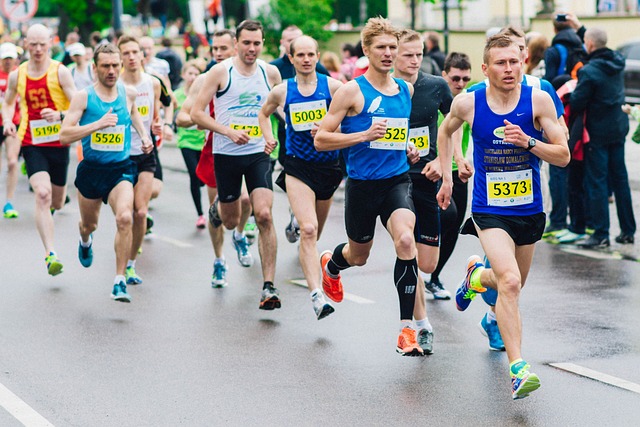
In the long battle against aging, every contender undoubtedly yearns to remain on the racetrack for as long as possible. Long ago, in the first modern Olympic Games of 1896, the marathon was introduced as a new form of long-distance running event. This 42.195-kilometer race was created to commemorate the Greek messenger Pheidippides of 490 BC, who unfortunately passed away after delivering the joyous news of a military victory. The marathon has now become an annual global event that must be seen, with more than 800 races held each year, drawing tens of thousands of runners who participate not just for the joy of running, but also for the stronger will and healthier body that comes with persistent running.
The difficulty of a marathon race usually intensifies in the second half, by which time many participants are looking forward to the finish line. However, in 2023, a race described by Vox reporter Whizy Kim as "the ultimate super marathon—a race participants hope could go on indefinitely" marked its beginning. This competition, dubbed the "Youth Restoration Olympics," is less a contest of physical prowess and more a race where participants strive to slow down the rate of biological aging. Even though people age a year annually, the decline in bodily functions doesn't always keep pace with age increment. In recent years, researchers have found that the concept of biological age more accurately reflects an individual's aging status. Generally, a younger biological age than actual age implies a slower pace of aging.
Even if you strictly follow professional dietary and health advice, it doesn't guarantee victory in this "Youth Restoration Olympics," a point exemplified by the event's initiator, American tech entrepreneur, and 46-year-old millionaire Bryan Johnson. Eleven years prior, his company Braintree captured the attention of PayPal and was acquired for $800 million. According to Time magazine, Johnson earned more than $300 million in one night.
This entrepreneur again became the center of media attention for his unique and strict lifestyle. Reports claim that Johnson strictly controls his diet, insists on finishing dinner by 11 a.m., and consumes 111 different types of tablets daily to supplement necessary trace nutrients. He claims to consume over 30 kilograms of vegetables per month (mostly juiced), uses various advanced devices to monitor his health in real time, and ensures a bedtime of eight o'clock every night. At night, he also wears specialized equipment to monitor his physiological functions, and a red light cap to stimulate hair growth. He has recruited a team of 30 doctors to help him not just look younger but be substantially younger in body, for which he spends an estimated $2 million annually.
Mr. Johnson has undergone six transfusions of young plasma in his attempts to reverse aging, once even receiving a donation from his 17-year-old son. This practice was initially inspired by mouse experiments indicating that young plasma might benefit the improvement of bodily functions and cognitive abilities. However, Johnson did not feel the anticipated benefits and ultimately stopped the research project.
Meanwhile, Business Insider reports that 55-year-old woman Julie Gibson Clark won second place in a competition called "The Rejuvenation Olympics," beating sixth-place Johnson. It is understood that Clark spends only $108 a month on anti-aging through careful diet and exercise, aging about 0.665 years each year, whereas Johnson ages faster at a rate of 0.72 years.
Biologically speaking, our genes are inherited from our parents and are essentially fixed at birth. These genes determine our likelihood of illness, and their expression can also be influenced by epigenetics. The latter is related to our diet, sleep, exercise habits, and environmental exposures. As individuals grow and age, changes in epigenetics accumulate, which can serve as indicators to judge biological age in humans.
In 2013, a professor and biostatistician from University of California, Los Angeles, Steve Horvarth, published a study in "Genome Biology" that introduced an aging clock based on the levels of 5-methylcytosine at 353 CpG sites in the human genome. This aging clock is associated with the biological age of various human tissues. However, its practical application requires sampling from multiple tissues of an individual, which is not likely to be feasible. To address this issue, second-generation aging clocks have been developed, among which is the PhenoAge clock, based on 42 biomarkers in human blood for predicting biological age.
It is worth noting that the biological age measured by these aging clocks is significantly correlated with the risk of death and cause-specific mortality rates. However, these clocks have limitations because they are sampled from different people at different life stages and should not be used to determine an individual's aging speed at a specific period.
The aging speed of the participants in "The Rejuvenation Olympics" was assessed using an algorithm called DunedinPACE, which mainly measures the physiological aging speed of a person, and is not directly related to the biological age predicted by epigenetic clocks. It is based on data from the years-long Dunedin Study.
The small city of Dunedin on New Zealand's South Island has become a focal point of attention because 1037 infants born at the Queen Mary Maternity Hospital in Dunedin between April 1, 1972, and March 31, 1973, have been under continuous observation and study for half a century. Researchers from Duke University have closely followed these participants from age 3 to 51, ultimately creating the DunedinPACE algorithm, which is based on 173 CpG sites and used to assess an individual's rate of aging.
DunedinPACE is the first aging clock developed entirely based on the phenotypic training of an individual's life-long aging process. By tracking age-related changes in methylation markers, DunedinPACE can quantitatively assess the rate of integrity loss in physiological systems. Studies indicate that the aging speed evaluated by the algorithm is highly correlated with the occurrence of diseases. For example, if the algorithm indicates someone's aging speed is slightly higher than their actual age, it means that within the next seven years, the person's risk of death will increase by 56%, and the risk of chronic disease will increase by 54%.
Moreover, rapid aging is closely related to genetics and early life experiences in childhood. Lower social status in childhood, adverse events experienced, and short familial lifespan all have a significant impact on the aging process. Nevertheless, participants staying in the "Rejuvenation Olympics" try to slow down their aging pace by changing dietary habits, increasing physical exercise, and regularly measuring their biological "age," but true rejuvenation is biologically impossible at present. These individuals are mostly affluent groups passionate about collecting and analyzing personal health data, striving to maintain health by adjusting every detail of life.
For Clark, the opportunity to participate in the "Rejuvenation Olympics" might have been a serendipitous chance. She was invited to join the competition while purchasing nutritional supplements. After getting involved, she might have the opportunity to enjoy a longer, healthier life in a more salubrious way.









Comments 0