Why Has Shenzhen's Foreign Trade Surpassed Shanghai?

Wed, Oct 28 2026
Why Has Shenzhen's Foreign Trade Surpassed Shanghai?
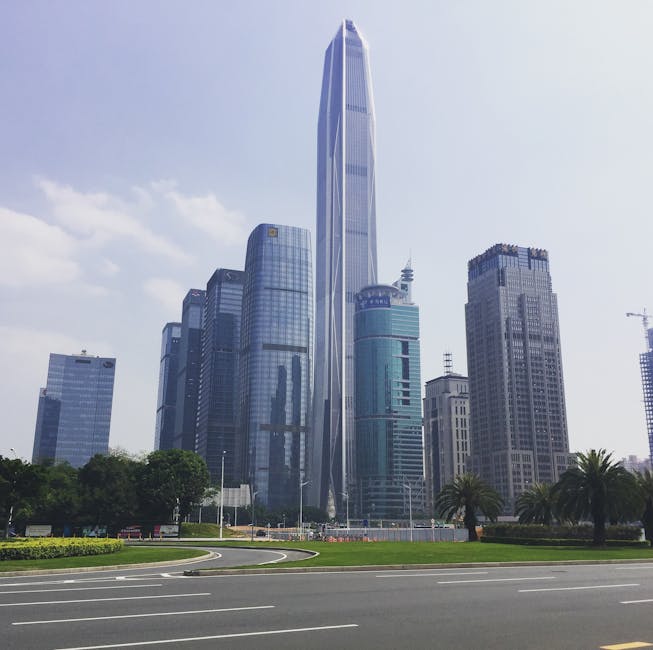
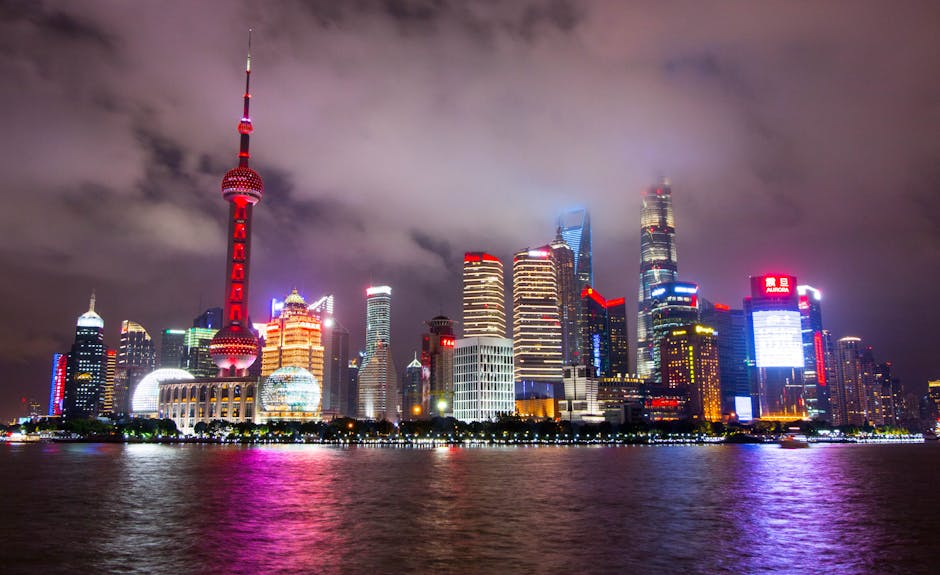
As a symbol of change, the leading city in the foreign trade sector has shifted. In the first four months of this year, Shenzhen's cumulative import and export volume reached an impressive RMB 1.41 trillion, achieving a year-on-year surge of 31.8% growth; while Shanghai's import and export total value during the same period was slightly more stable, only reaching RMB 1.39 trillion, with a year-on-year increase of just 0.1%. Such achievements in Shenzhen indicate that, after maintaining the honor of the city with the largest export volume for 31 years, it has now won the new title of the top city for foreign trade (the combined total of imports and exports).
Both Shanghai and Shenzhen are industrial powerhouses in China, and they are equally formidable in the field of foreign trade. More than ten years ago, Shenzhen once surpassed Shanghai to become the city with the largest foreign trade volume, but it was later overtaken by Shanghai again, and this has been maintained until now. Currently, Shanghai is still the only provincial-level city with a foreign trade volume reaching 4 trillion yuan, while Shenzhen and Beijing both have trade volumes of over 3 trillion yuan, Suzhou exceeds 2 trillion yuan, and other cities are below 2 trillion yuan. In the past few years, influenced by global geopolitics, international games, and some unexpected factors, Shanghai's foreign trade performance has experienced some fluctuations, providing Shenzhen with the opportunity to close the gap and even surpass.
Whether it is Shanghai or Shenzhen, these two cities possess strong comprehensive competitiveness and have much in common. Both are based on manufacturing, the financial industry, and the information industry as their pillars, own massive economic backing and world-class harbor clusters, and rely on foreign trade as a major economic driver. Although both cities have a high dependence on foreign trade, Shanghai leans more towards import, while Shenzhen excels in export.
Leveraging its international advantages, Shanghai is not only the forefront for Chinese companies going abroad but also the gateway for foreign enterprises entering the Chinese market. As a global center of economy, finance, trade, and shipping, it connects the key nodes of domestic and international economic cycles and boasts multiple major strategic advantages such as the integration of the Yangtze River Delta, the International Import Expo, and the Free Trade Zone. Shanghai occupies an unshakable position in both imports and exports.
By contrast, Shenzhen is full of market vitality, based on a large number of private enterprises. With the geographical advantage of the Pearl River Delta, proximity to Hong Kong, and its broad manufacturing scale, Shenzhen's advantage in the export market is particularly significant. Shenzhen has remained the top national export city for 31 consecutive years, and its export scale is even comparable to that of a country like Vietnam. Exports are oriented towards the global market, while imports reflect the development potential of the domestic market, and the economic cycles of the two are also different. As for who will win the title of the top city in foreign trade volume for the whole year, the result is still unknown.
So, how did Shenzhen manage to surpass Shanghai in total foreign trade volume? Since the beginning of this year, the nation's foreign trade performance has far exceeded optimistic expectations, benefiting from the moderate recovery of the global manufacturing industry, the start of the inventory replenishment cycle in the United States, and the rapid growth of foreign trade in the participating countries of the "Belt and Road" initiative. However, due to differences in the industrial structures of different cities, their performance in the new round of foreign trade competition also varies.
In Shenzhen, private enterprises dominate, contributing over 60% of the import and export activities, which is consistent with its status as ranking first in the nation in terms of market entities and the number of enterprises. In comparison, over half of Shanghai's imports and exports come from foreign-funded enterprises, state-owned enterprises account for more than 10%, and private enterprises make up about one-third.
With the thriving development of cross-border e-commerce, Shenzhen has quickly become a leading city in the industry. The rise of this online trade has brought new growth momentum to the global export market. In this new era marked by e-commerce, Shenzhen's cross-border e-commerce import and export volume exceeded 110 billion yuan in the first quarter, an increase of nearly 95% year-on-year, accounting for about one-fifth of the national total.
Over the past few years, major Chinese e-commerce platforms such as SHEIN, Temu, AliExpress, and TikTok Shop have set sail overseas, rapidly penetrating the global market. They are known as the "Four Little Dragons" of cross-border e-commerce. Shenzhen not only possesses unique geographical advantages and industrial bases but also is an important part of the international business center, thus becoming a key point for observing the development of cross-border e-commerce.
Under the impetus of cross-border e-commerce, traditional export commodities such as household appliances and furniture, as well as emerging export products like electric passenger vehicles and lithium batteries, are advancing side by side, jointly promoting the strong recovery of Shenzhen's foreign trade.
When we focus on the ten most powerful Chinese cities for foreign trade, we can easily see that all of these cities are situated in the bustling eastern coastal areas. They are Shanghai, Shenzhen, Beijing, Suzhou, Dongguan, Ningbo, Guangzhou, Xiamen, Qingdao, and Hangzhou. The dominance of the eastern region is due to its proximity to the sea and developed port facilities, factors that make their foreign trade capabilities even more robust.
It is noteworthy that, although cities like Tianjin have fallen out of the top ten due to changes in their trade structure, Hangzhou has successfully entered the list. On the other hand, cities such as Chongqing and Chengdu, though they briefly entered the top ten, have not been able to maintain their position due to the fluctuations in the global market. In the tide of foreign trade, Beijing, despite not being a manufacturing giant and lacking large ports, still ranks in the top three due to its vast import scale. Meanwhile, Dongguan, despite not being among the top in economic volume, firmly occupies the spot in the top five with its high export dependency and strong export-oriented economic system.
It is not hard to see from these changes that both traditional trading forms and the emerging field of cross-border e-commerce are continuously shaping the pattern of China's foreign trade.
All the past is but the beginning of a beginning, achievements can only represent the past, not a promise for the future. Today, as the changes of a century continue to evolve, anti-globalization, trade protectionism, and regional clustering development have brought unprecedented challenges to the development of the foreign trade industry.
The higher the dependence on foreign trade, the greater the potential uncertainty and risks that come with it. On the stage of this grand market of foreign trade, which participants can withstand the pressure, go against the current, and reshape their competitive advantages, remains our focal point of attention.






Comments 0